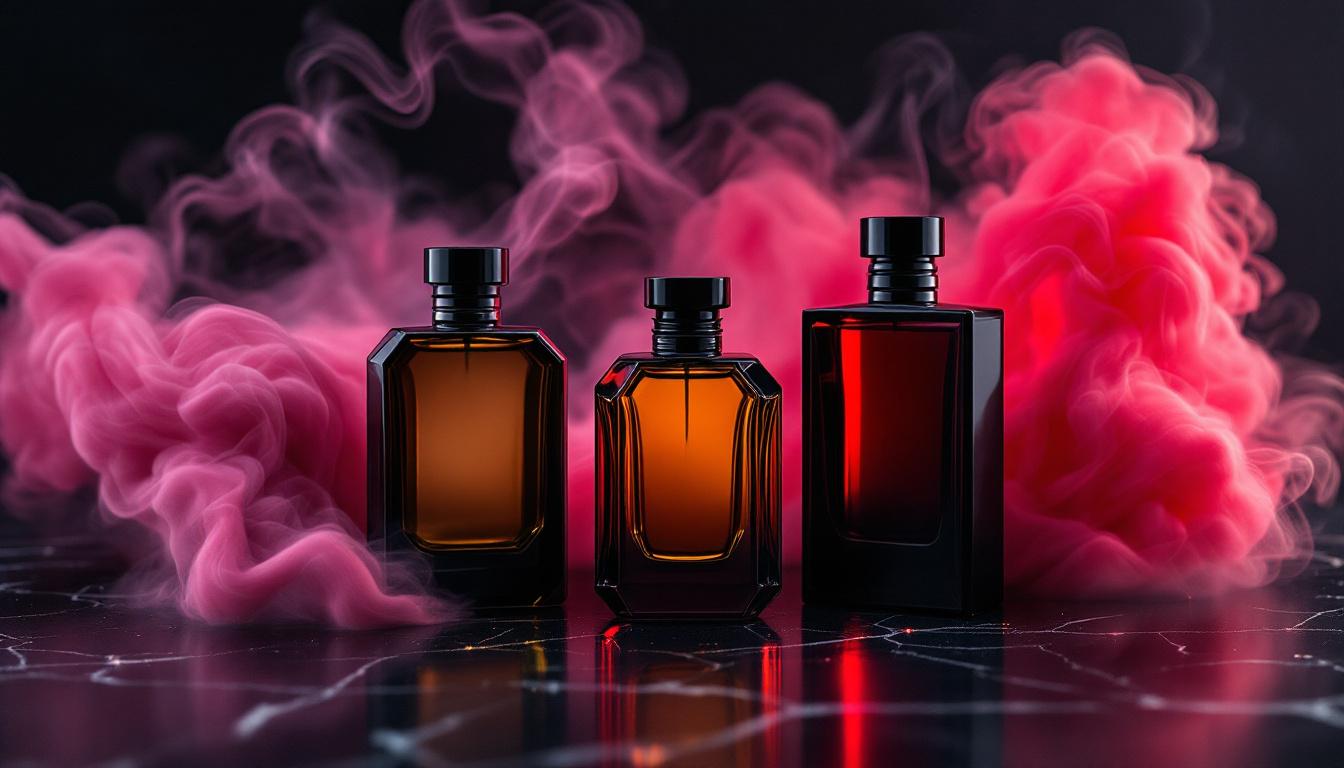
One of the questions I get most is: "Can you mix two perfumes?" The answer is yes. The more interesting answer is: how do you do it well?
Layering fragrances is genuinely one of the most creative things you can do with perfume. It's how you move from wearing someone else's creation to creating something uniquely yours. But there's a bit of logic to it.
The Basic Principle
Think about the scent pyramid again. When you layer fragrances, you're essentially building a more complex pyramid. You're creating depth.
The basic rule is this: start with something warmer and heavier as your base, then add something lighter and brighter on top. The heavy note will anchor the lighter one, and the result is a longer-lasting, more interesting fragrance than either alone.
The tricky part is making sure they actually work together. Some fragrances will fight each other. Others will blend into something that's neither one thing nor the other. The best pairs enhance each other.
What Actually Works
Fragrances with similar note families are usually a safe bet. If you're layering two gourmands, you're working with the same emotional space. Vanilla + amber? That works. Vanilla + tonka? Even better.
Warm + cool can work beautifully, but it requires intention. A warm gourmand layered with a cool floral creates a hybrid—it's both things at once. Not a blending, but a conversation. That's compelling if the notes actually complement each other.
What's harder is layering two completely different fragrance families. A floral + a cologne + a gourmand at the same time? Usually, that's chaos. Too much information. Your nose doesn't know what to focus on.
The Application Technique
Order matters. Usually, you want to apply the heavier, warmer fragrance first. Let it settle on your skin for a minute. Then apply the lighter fragrance to specific pulse points—usually just the neck, or the wrists, or behind the ears.
The idea is that the second fragrance sits on top, creating layers. You smell the brighter notes immediately, but as they fade, you come back down to the anchoring base.
If you reverse the order—light fragrance first, heavy on top—you'll smell overwhelmingly sweet or heavy immediately, and the lighter notes will be buried.
Suggested J&B Pairings
Since I'm intimately familiar with all three of our fragrances, let me suggest some actual combinations that work.
No. 1 + No. 2 is magical. Apply No. 2, Spun & Golden, to your pulse points as your base. Then add a light spray of No. 1, Powder & Petal, to your neck and wrists. You get the warmth of the gourmand underneath, but the floral comes through on top, adding elegance and complexity. It's like wearing two different aspects of yourself at the same time.
No. 2 + No. 3 for a sophisticated day. Start with No. 3, Ember & Velvet, on your wrists and inner elbows. Then a spray or two of No. 2, Spun & Golden, on your neck. The darkness of No. 3 grounds everything. The sweetness of No. 2 adds just enough lightness to keep it from feeling heavy. It's mature and interesting without being too serious.
No. 1 alone is actually perfect, and you might not need to layer it. But if you wanted to, No. 1 + a skin musk (something neutral and warm) would create a whisper-soft fragrance. You'd get the floral with an invisible warm base. It's minimal but beautiful.
The key with all of these is restraint. You're not trying to create a new fragrance. You're trying to add dimension.
The Science of Why It Works
Fragrance molecules are hierarchical. Some are stronger than others. Heavy base notes—vanilla, amber, musk—have strong presence. They basically announce themselves.
When you layer, you're letting the stronger note provide the backbone, and the lighter note provides interest and complexity. Your nose processes the lighter one first because it's volatile and moves quickly. Then, as your skin warms everything up, the base note becomes more prominent.
The best layering combinations have complementary molecules. Vanilla and floral, for instance—they share some characteristics, so they blend rather than compete. Vanilla and spice—those are more contrasting, so they feel like distinct notes playing together.
When Not to Layer
Some days, you don't need to. Sometimes a single, beautiful fragrance worn properly is more elegant than a combination. There's nothing wrong with wearing No. 2 by itself, for example. It's complete. It doesn't need anything.
Also, don't layer just because you have multiple fragrances. Wearing three scents at once is overwhelming, and you'll just smell confused. Stick to two. Maybe two and a half if you're very careful.
And be honest with yourself: if a combination smells bad, it's not going to improve. There's no shame in trying something and deciding it doesn't work.
Making It Your Own
The real joy of layering is that it becomes personal. You start to understand your skin, understand how fragrances develop on you, understand what makes you feel a certain way.
Maybe you layer No. 2 and No. 3 every Monday, and No. 1 by itself every Friday. Maybe you have a winter layering combination and a summer one. Maybe you discover a pairing that's utterly unique to you—something nobody else would think of, but it makes you happy.
That's when fragrance stops being something you wear and becomes something you create. And that's what it should be.