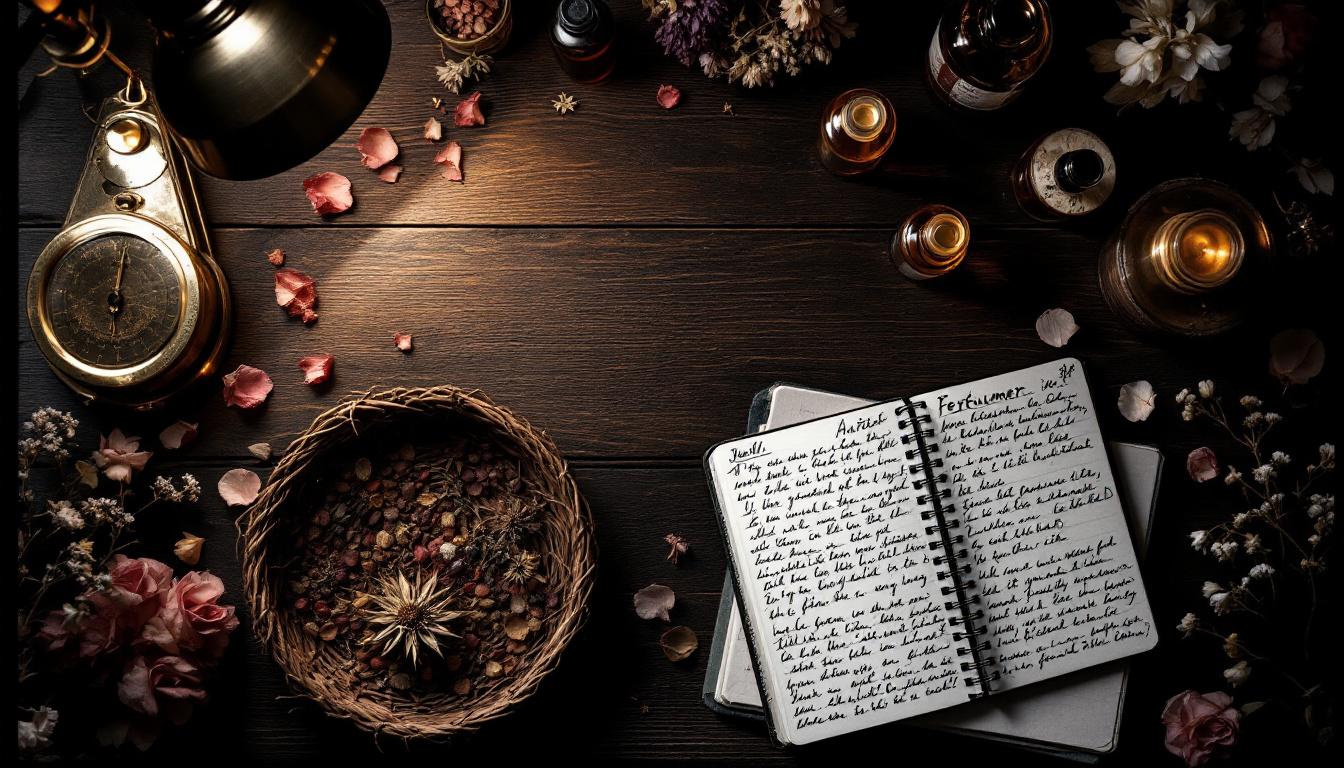
People often ask where I make the fragrances, and they seem disappointed when I say it's in a studio at home. They imagine some romantic setup in the countryside, or a trendy workspace in a creative hub.
The reality is simpler and, honestly, better. A good perfume studio isn't about aesthetics. It's about control, organization, and conditions that don't ruin your ingredients.
Let me walk you through how it's set up.
Location is Everything
The first thing you need is stable temperature. Fragrance ingredients are volatile. They break down at high temperatures, they thicken at low temperatures, and they're happiest at a consistent 18-22 degrees Celsius.
My studio is in a north-facing room in the house. This means it gets minimal direct sunlight—no afternoon heat pouring through windows. It's cool by default. In winter, I don't need extra heating. In summer, I barely need to open a window.
If I had to set it up again, I'd prioritize this more than anything else. Temperature stability is non-negotiable.
Light also matters. Ultraviolet light degrades fragrance components. So I have minimal natural light—just one window that I keep covered with a blackout blind most of the time. When I need to see something properly, I use a daylight lamp. It gives you the light you need without the UV.
The Workbench
The actual workspace is simple. I have a large, light-colored wooden bench with a lot of surface area. I need space to lay out bottles, test blends, keep notes. The light color matters—if I spill something (and you do, sometimes), it's immediately visible.
Underneath the bench are shelves for storing ingredients. Everything is in clearly labeled glass bottles with dropper caps. I organize by type: florals, citrus, woods, gourmand, spices. Clear categories make it faster to find what you need, and it reduces the chance of mistakes.
On top of the bench, I keep a precision scale for weighing ingredients. Some fragrance makers work by drops and intuition. I weigh everything. It means I can replicate a batch exactly, and it means I can scale up safely when I move from testing to actual production.
Safety and Ventilation
People don't talk about this enough, but fragrance composition isn't entirely benign. You're working with concentrated essential oils and fragrance compounds. Some are irritating to skin, some can be harsh on the respiratory system if you're breathing them all day.
I have a fume hood—not a restaurant-grade one, but a desk-sized unit that draws air away from where I'm working and filters it. It's not essential if you're doing this occasionally, but if you're doing it regularly, it's genuinely important for your health.
Beyond that, good ventilation. The door stays open when I'm working. The window isn't blocked all the time. I'm not trying to create a sterile lab environment, just something that doesn't get heavy with fragrance fumes.
The Equipment You Actually Need
Less than you'd think.
A precision scale: essential. Dropper bottles for ingredients: essential. Glass vials for testing: essential. Beyond that, you're adding nice-to-haves.
I have a small magnetic stirrer for blending, which is genuinely useful. I have test strips and paper. I have notebooks for recording recipes and development notes. I have a reference library of fragrance materials so I can look up characteristics and compatibility.
The thing people buy that they don't need: a lot of fancy bottles and equipment before they've even created something. You don't need special caps or atomizers until you actually have a fragrance to put in them. Start simple. Add complexity as you need it.
Organization Systems
Here's where it gets personal. I keep a development notebook for each fragrance. When I created No. 2, Spun & Golden, I had pages and pages of notes. What I tried, what didn't work, where I got the breakthrough, what tweaks I made after that.
This might seem excessive, but it's genuinely useful. If someone asks me why a fragrance has a certain note, I can look back and remember exactly when I added it and why. If I ever need to tweak it, I have documentation of the entire journey.
I also keep a master inventory of ingredients. When did I open this bottle of vanilla? How much have I used? When should I reorder? It sounds boring, but it prevents disasters. You don't want to run out of a key ingredient mid-production.
The Space Changes Over Time
When I started, my studio was basically a shelf in a cupboard. Now it's a dedicated room. The progression made sense—I tested and refined before I invested in proper space and equipment.
If you're thinking about starting, you don't need to build a full studio immediately. You need enough space to work safely, enough organization to not lose things, and enough consistency in temperature to not ruin your ingredients. That could be a desk, a shelf, a corner of a room.
Upgrade as you go. Your needs will evolve with what you're trying to create.
The Unofficial Equipment: Moo
I should mention Moo, because she has very strong opinions about the studio setup.
When I first set everything up, she was deeply unimpressed. But after a few weeks, she decided the windowsill was the best place in the house to nap. She's there almost every afternoon—a black cat silhouette against the glass, sleeping through the morning's work, occasionally waking to judge my fragrance choices.
She's knocked over exactly two vials. Both full. Both expensive ingredients. She does not care.
But there's something about having her there that makes the space feel less like a workspace and more like a studio. It's a room where something real happens, but it's also a room where life happens. That seems important.
The Point of It All
A perfume studio doesn't need to be intimidating or fancy. It needs to be functional and safe and organized enough that you can actually think clearly while you're working.
The best part is that a home studio means you can iterate quickly. You can make a test batch in the afternoon, let it develop overnight, smell it in the morning, and decide what to try next. There's no bureaucracy, no waiting for approvals, no distance between the idea and the execution.
That's where the magic happens. Not in expensive equipment or the perfect aesthetic. In the space between an idea and reality, where you get to figure out what actually works.
Even with a cat judging you from the windowsill.