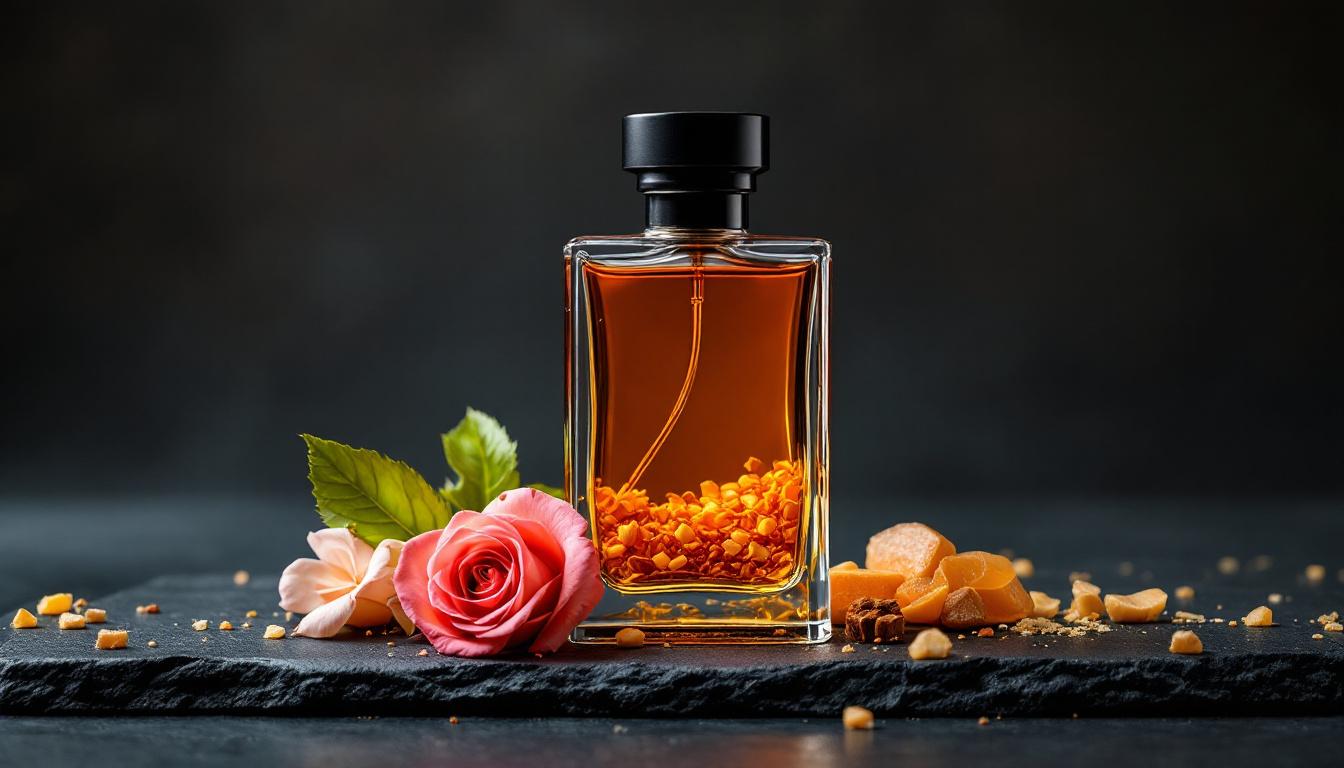
You spray on a perfume in the morning. It smells absolutely perfect. By lunchtime, something's shifted. Not in a bad way necessarily, but it's different. Maybe it's warmer. Maybe it's softer. Maybe you can't quite smell it anymore (but everyone around you definitely can).
This isn't the perfume going bad. It's the fragrance doing exactly what it's supposed to do. And to understand why, you need to know about the scent pyramid.
The Three Layers
Every fragrance is built in three acts. Think of it like music: the opening hook, the verse, and the final chorus that stays with you.
Top notes are the first thing you smell. They're bright, they're immediate, they're often citrus or herbal or fresh. They're also the shortest-lived—usually they last somewhere between 5 and 15 minutes. They evaporate quickly because they're made of smaller, more volatile molecules.
Then the heart notes emerge. This is the main character of the fragrance. It's usually floral, fruity, or spicy. It lasts the longest—anywhere from 3 to 8 hours depending on the fragrance and how concentrated it is. The heart note is what you'll smell for most of the day.
Finally, the base notes kick in. These are the heavy hitters: vanilla, musk, sandalwood, patchouli, amber. They're the warmth underneath everything. They last the longest of all—sometimes 8 hours or more—because the molecules are larger and heavier. They evaporate slowly.
Why This Matters
The scent pyramid exists because of chemistry. Fragrance is a liquid blend of scent molecules suspended in alcohol. When you spray it on your skin, the alcohol starts evaporating immediately. The lightest molecules (the top notes) evaporate first. The heavier ones stick around.
This is actually brilliant design, not a flaw. If a perfume opened with its heavy base notes, you'd smell like a furniture polish counter. If it was all top notes, it would disappear in minutes. The pyramid structure creates a journey. Your fragrance unfolds.
How This Plays Out in Our Fragrances
Take No. 2, Spun & Golden. It opens with neroli and petitgrain—bright, zesty, slightly citrus. Those top notes make you smile the moment you spray it. Then, over the next few hours, vanilla and tonka and caramel emerge. That's the heart—it's the reason you fell in love with the fragrance. By the end of the day, you're left with just the base: vanilla, amber, a whisper of musk. It's softer, more intimate, more skin-scent.
No. 3, Ember & Velvet, works differently. The top notes are spicier—there's pepper, a bit of intrigue. The heart is where the dark, creamy gourmand magic happens. And the base? That's where the vetiver and the slightly smoky notes live, giving the whole thing depth and shadow.
Even No. 1, Powder & Petal—which you might think is all one thing—has this structure built in. The opening is slightly greener, slightly fresher. As it settles, the powdery florals become the focus. The base is soft and delicate.
This Is Why Perfume Costs What It Does
Creating a fragrance that actually lives through all three acts, where each layer is interesting and intentional, takes serious skill. Anyone can layer a top note on something. Building a fragrance where the transition between them feels natural, where each act feels like it belongs to the same story—that's the craft.
When you're working small batch, when every bottle is something you've thought about carefully, the scent pyramid isn't just theory. It's the whole point. It's why you can wear a Jam & Bottle perfume in the morning and smell something slightly different at noon, and still love it just as much.
It's unfolding. And that's the beauty of it.